
A familiar home is valuable. So are frequent observation, an established hygiene routine and an emergency plan. Compare the real care on offer rather than assuming either “home” or “facility” automatically provides all of those things.
Start with your particular bird
Consider temperament, handling, diet, medication and how your bird responds when their owner is absent. A bird that is highly unsettled by transport may benefit from remaining at home if a capable person can provide enough supervision. A bird that needs frequent observation, social sound or experienced handling may be better served by a specialist boarding routine.
Flighted, clipped, elderly, feather-plucking, aggressive and difficult-to-handle birds do not all need the same arrangement. Give any prospective carer the unpolished version of the bird's behaviour so the decision is based on reality.
Compare the care, point by point
| Question | At-home sitter | Boarding facility |
|---|---|---|
| Familiar setting | The cage and room can remain unchanged. | The setting changes, but familiar toys, perches, food and covers can travel with the bird. |
| Observation | Ask exactly how many visits and how much time the sitter spends with the bird each day. | Ask where birds are positioned, how often staff pass them and whether anyone is present on the property overnight. |
| Social sound | The home may be quiet between visits unless planned background sound is used. | Other birds and normal staff activity may provide company without direct cage-to-cage contact. |
| Hygiene | There may be no exposure to other birds, but cleaning discipline still matters. | Ask about spacing, shared items, hand hygiene, cleaning frequency and illness procedures. |
| Food and medicine | Confirm the sitter can reproduce the diet and administer every prescribed method. | Confirm what food is supplied, what you must bring and which medicines qualified staff can administer. |
| Emergency response | Confirm who notices a problem, who can transport and which veterinarian is used. | Confirm observation, owner contact, transport authority and who pays the veterinary account. |
| Weather and temperature | Agree how heating, cooling, windows and outdoor time are managed. | Ask what keeps birds indoors and how indoor heating, cooling and ventilation are controlled. |
| Updates | Set a realistic message and photo schedule. | Ask for the facility's normal update frequency, including peak-season variation. |
Questions to ask any parrot carer
- How many times will someone physically observe my bird each day?
- Who has enough bird experience to recognise a change in eating or behaviour?
- Will cages, perches, bowls, toys or cleaning equipment be shared?
- How are hands, bowls, cages and the room cleaned?
- Will dogs, cats or unfamiliar people be visible or close enough to cause stress?
- Will anyone take my bird out of the cage, and only with whose permission?
- Can the carer administer the prescribed medication correctly?
- What happens if the bird stops eating or appears infectious?
- Who contacts me, who transports the bird and which costs remain mine?
- How often should I expect messages and photographs?
How the Purrfect arrangement works
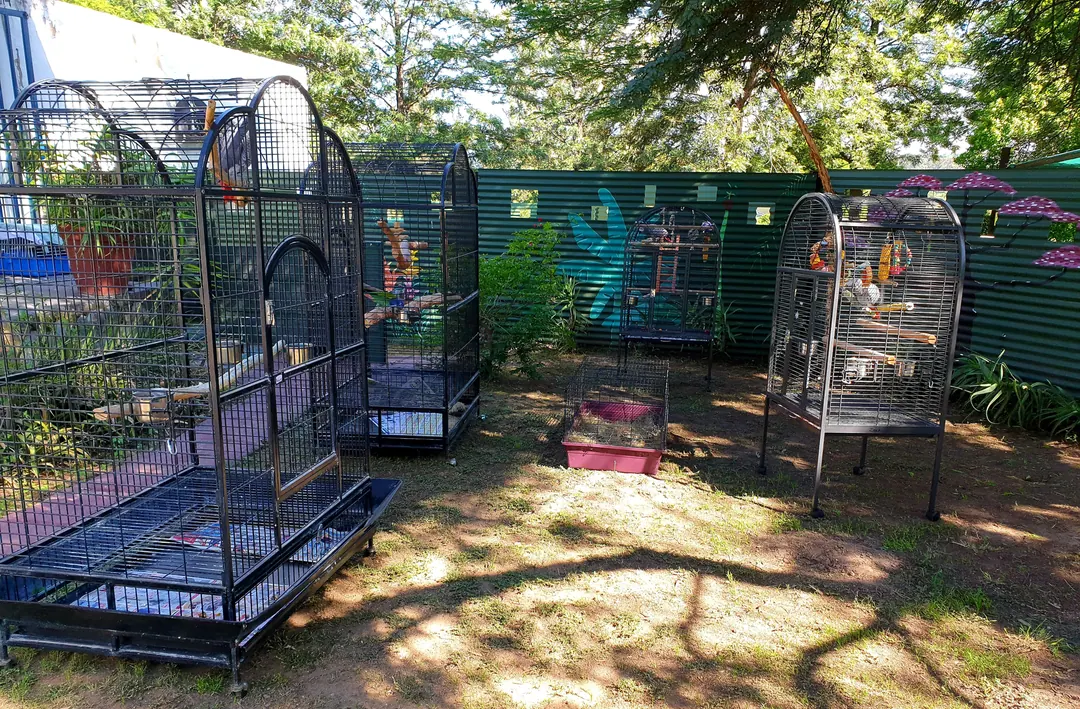
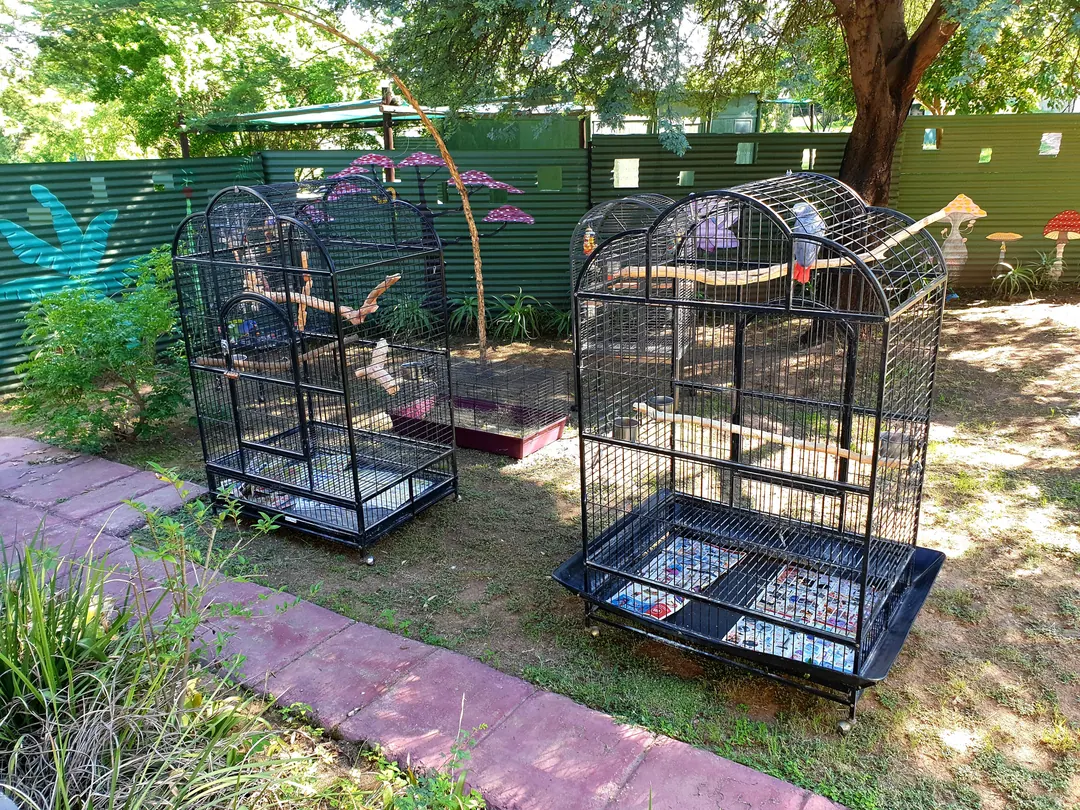
At Purrfect, birds are positioned in a dedicated area where Kim and the team pass throughout the day. Cages remain at least one metre apart. Perches, bowls, play equipment and cleaning equipment are not shared between birds from different households, and staff disinfect their hands between cages.
Dogs occupy a completely different private area and cats stay in secure indoor suites. Birds spend suitable days in the sheltered garden, return indoors at 16:00 and are covered from 20:00 to 07:00. Rain or very cold weather keeps them inside.
Interaction is tailored rather than imposed. Birds leave their cage only with owner permission, under Kim or qualified staff supervision in the double-gated indoor area. Messages and photographs are generally sent every two to three days.
Know when neither option is enough
A home sitter or boarding facility is not a substitute for hospital care. Purrfect cannot accept a bird whose veterinarian recommends remaining in a veterinary hospital overnight. If your bird is unwell at arrival, a veterinarian's health certificate is needed before check-in can proceed.
Health boundary: Purrfect cannot accept birds with psittacine beak and feather disease (PBFD). Birds under two require a PBFD-free certificate.
Make the decision you can explain
The strongest choice is the one where you can describe the full day, name the person responsible and state what happens in an emergency. If either option depends on “someone will probably notice,” keep looking.
Before deciding on Purrfect, you are welcome to arrange a viewing by appointment, see the estate and ask Kim about your bird's particular routine.