
Preparation does not mean trying to make every detail unfamiliar before the stay. It means keeping the important parts of your bird's routine clear, portable and easy for another experienced carer to follow.
Start with the dates
Purrfect boards birds throughout the year and has no minimum stay. December fills first, so book as early as your travel plans allow. For Easter, allow at least one month where possible. The number of rental cages is limited and can become the practical constraint even before the bird area reaches capacity.
When you enquire, give the arrival and collection dates, species, age and whether you will bring a cage or need to hire one. This lets Kim confirm the right space before you plan the rest.
Write the care profile only your household knows
Species and age are the beginning, not the whole story. Use the booking form to explain:
- whether your bird is flighted, clipped or difficult to handle;
- how much contact they normally seek from people;
- whether anyone may take them out of the cage;
- their usual wake-up, feeding and covering routine;
- words, sounds or household habits that settle or agitate them;
- feather-plucking, advanced age, nervous behaviour or a recent loss;
- medication, allergies, prescription food and relevant veterinary history.
Purrfect does not force wary birds to interact. Birds leave their cages only with the owner's permission, under Kim or qualified staff supervision inside the double-gated indoor area.
Confirm the health requirements
Purrfect cannot accept a bird with psittacine beak and feather disease (PBFD). A PBFD-free certificate is required for every bird under two years old.
If a bird appears unwell at arrival, check-in can continue only once the owner supplies a veterinarian's health certificate. Routine deworming should follow your own veterinarian's advice. A bird whose veterinarian recommends overnight hospital care needs to remain in veterinary care rather than board.
This is practical boarding guidance, not veterinary advice. Ask your avian veterinarian about testing, deworming, medication or any health change before the stay.
Make the normal diet easy to reproduce
Purrfect supplies Avi Complete Maintenance for parrots and species-appropriate maintenance food for other birds. Food and fresh water are served twice daily, with bowls checked and refilled during the day.
Owners supply favourite treats, cooked meals and any special or prescription diet. Pack enough for the whole stay, with a little margin, and give clear written portions and timing. If medication is mixed into food at home, discuss that method before arrival rather than assuming the same approach will work in a new setting.
Choose the carrier or cage arrangement
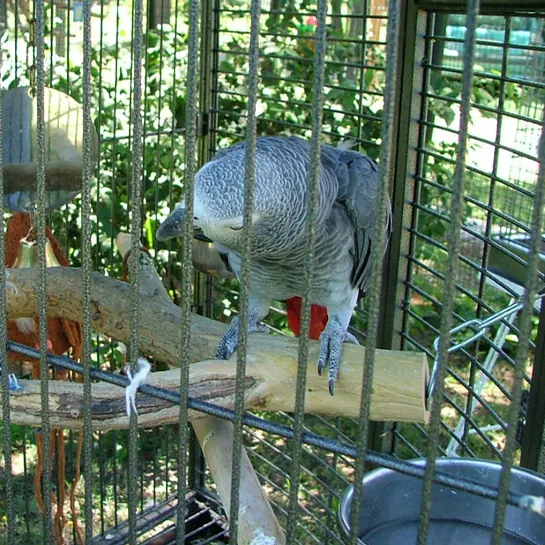
Your bird may arrive in their own cage or in a secure, appropriately sized carrier. Cat carriers are commonly used. Keep the carrier closed until staff have taken it inside the double-gated indoor area.
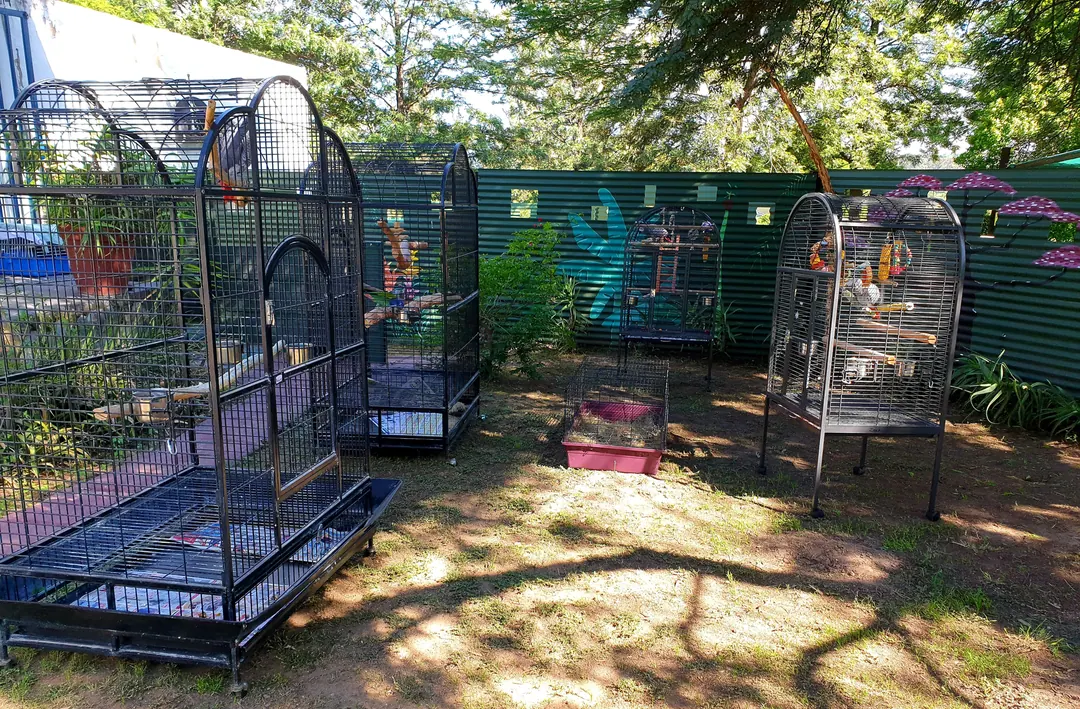
If the home cage cannot travel, Purrfect rents cages from budgie size through large macaw and cockatoo size for R10 per night. Stands, perches and night covers are available. Confirm cage hire when booking because the rental supply is finite.
Pack a few recognisable comforts
Familiar toys, puzzles, perches and covers are welcome. Choose the items your bird actually uses rather than filling the cage with new enrichment on departure day. If your bird is attached to a particular blanket or cage cover, bring it clearly named.
These items give staff useful information too: they show where your bird prefers to perch, what they choose to investigate and what usually signals bedtime.
Plan a calm, factual handover
Arrivals and collections are by appointment between 08:00 and 17:00. At check-in, point out medication, handling limits, preferred treats and the items that must return home. Say explicitly if your bird may leave the cage; silence is not treated as permission.
Very nervous birds are approached quietly and disturbed as little as possible. Birds still hear normal activity and other birds from a safe distance, and early-evening television provides gentle background sound. A bird refusing all food and treats for 12 hours is taken for medical assessment.
Before you leave home
- Booking and appointment time confirmed
- Secure carrier checked and ready
- PBFD certificate packed if under two
- Special food, treats and medication packed
- Handling and out-of-cage permission written down
- Familiar toy, perch or named cover included
For a more detailed bag-by-bag list, use the parrot boarding packing checklist.